A field guide to lower-league soccer in the midwest
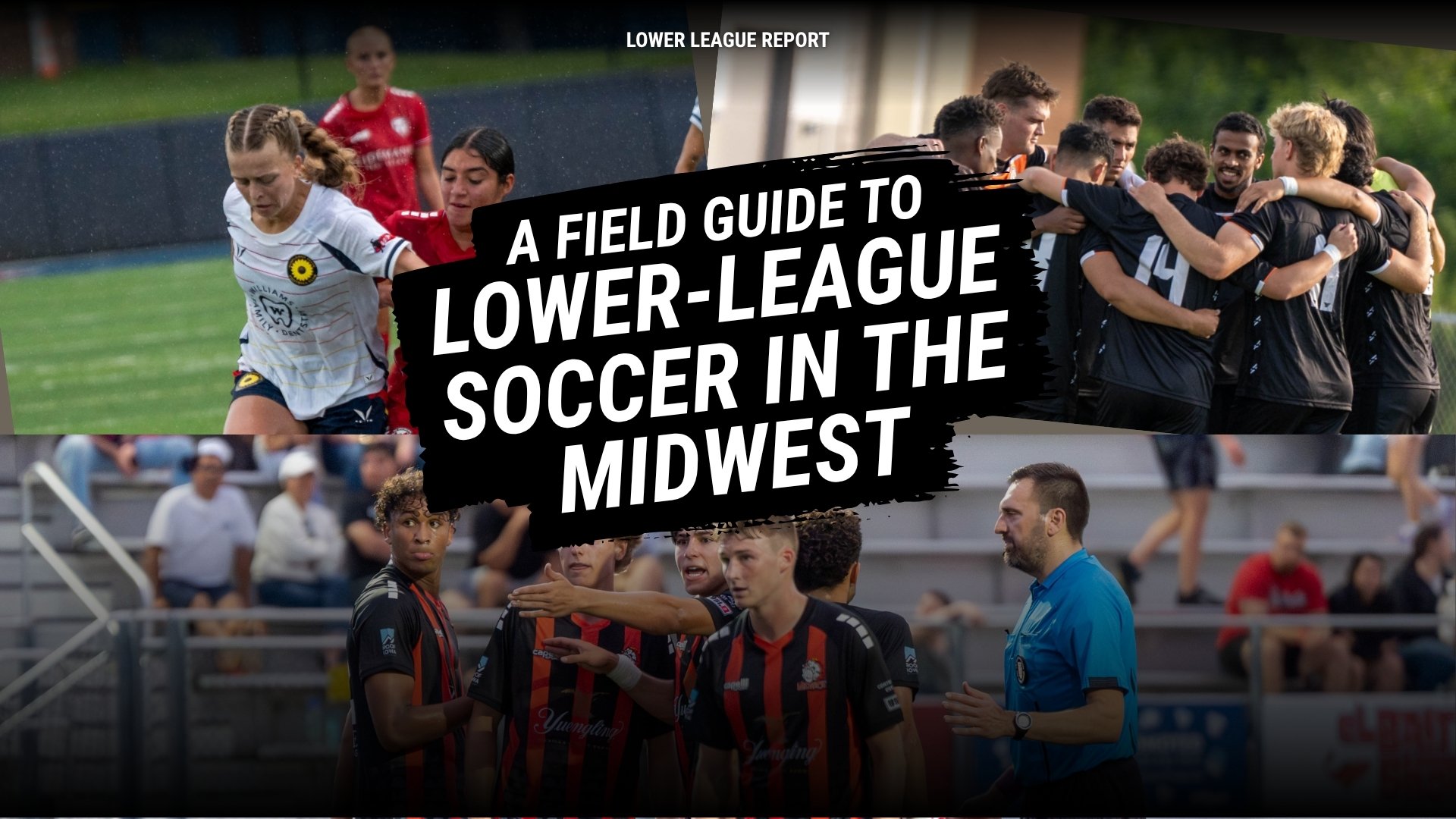
Just to be 100% clear. We focus on the states of Kansas, Missouri, Iowa, Nebraska, and some of Oklahoma and Illinois at the time of writing, not the entire midwest.
Lower-league soccer can be easy to miss if you do not already know where to look.
The clubs are spread across different leagues. The seasons overlap. Some teams play in professional stadiums, others play at college fields, high school facilities, or community venues. Rosters can change quickly, schedules can be short, and some of the best matchdays happen far away from the national conversation.
But once you start paying attention, the scene becomes hard to ignore.
Across the Midwest, lower-league soccer is being built by clubs, players, coaches, supporters, volunteers, and communities that care about the game long before the spotlight arrives. This guide is meant to be a starting point, not a complete map, but a way to understand the teams, leagues, and stories worth following.
What counts as lower-league?
For Lower League Report, lower-league soccer means the levels of the game below the biggest national stages.
That includes professional lower-division clubs, pre-professional summer teams, women’s pre-professional clubs, amateur sides, college programs, and local teams trying to build something of their own.
Some clubs are chasing promotion, trophies, or national recognition. Others are focused on player development, community connection, or giving local players a place to compete. Some exist as part of a larger pathway. Others feel more like neighborhood institutions.
The common thread is simple: these are the places where the game is still close.
Close to the players.
Close to the supporters.
Close to the communities that give each club meaning.
The Leagues to Know
USL Championship
USL Championship sits just below the top-tier of Major League Soccer (MLS) and soon to be USL Premier (in 2027) in the American men’s pyramid, occupying the second-division space assigned by the U.S. Soccer Federation. The clubs are still part of the lower-league world, but the scale is different: bigger expectations, bigger budgets, more established operations, deeper rosters, and a sharper sense that results matter on a much larger national scale.
In the Midwest, the club to know is FC Tulsa. Based in Tulsa, Oklahoma they represent one of the league’s most interesting stories. long-suffering supporters, a sudden rise, then a painful Final loss on penalties in 2025, and a club that now feels like it has unfinished business.
Lower League Report angle: FC Tulsa is on our radar. We are not yet covering them but they are one of the clubs we intend to cover in the future.
USL League one
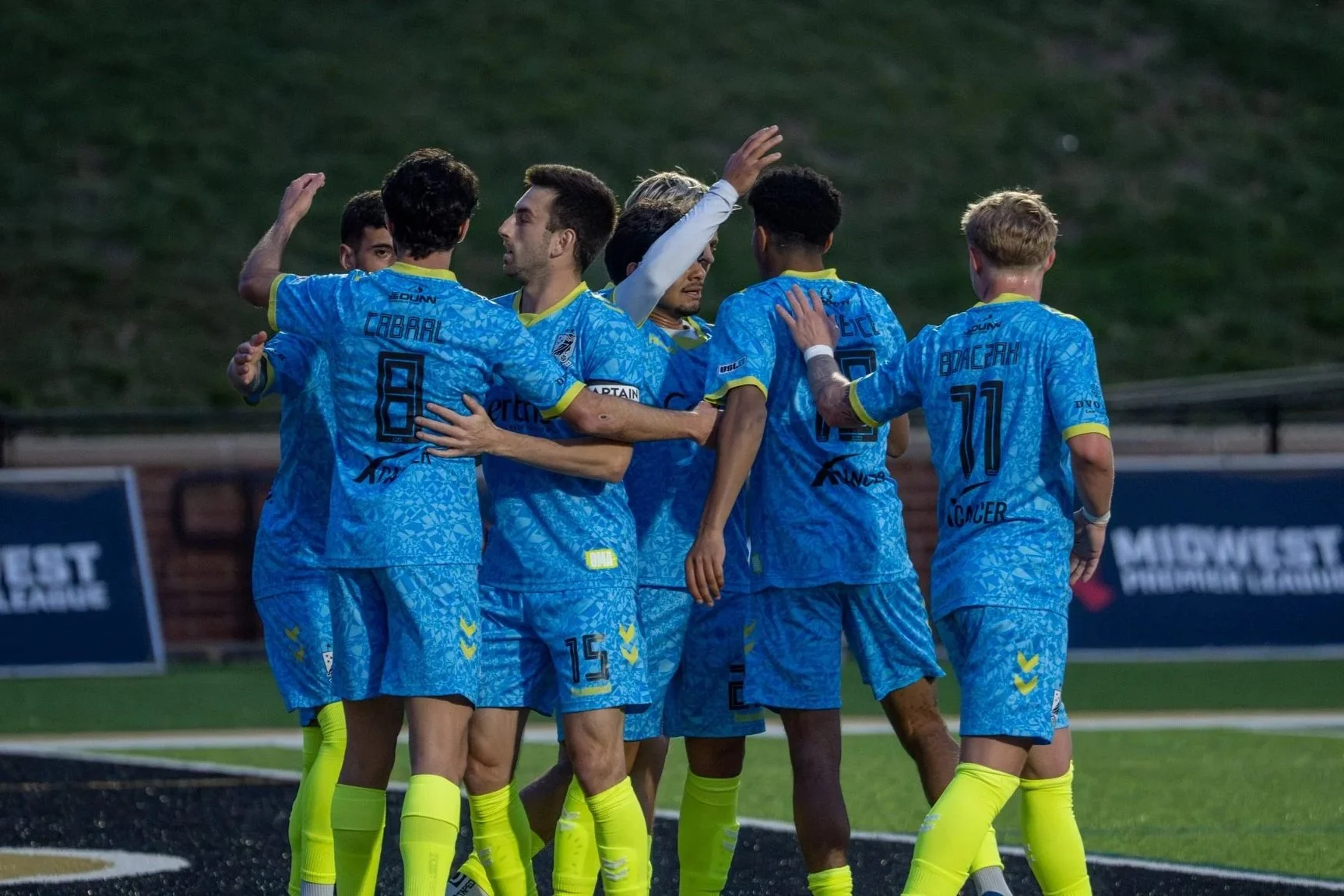
Union Omaha celebrates after scoring a goal in the U.S. Open Cup First Round match against BOHFS St. Louis in St Louis on March 18th, 2026 - Photo by: Austin Farrow
USL League One is part of the professional lower-division landscape in American soccer. They sit just below USL Championship and are in the third tier of the U.S. Soccer Pyramid. For clubs in this space, the stakes are higher, the operations are more formal, and the pathway is more visible.
In the Midwest, the club to know is Union Omaha. Based in Omaha, Union Omaha represents one of the clearest examples of professional soccer outside the top tier.
Why it matters: Union Omaha have been one of the most successful teams in USL League One in recent seasons. And at the time of writing they’re 1st in the league but I should mention multiple teams have games in hand against them so that could change. Another interesting angle with Union Omaha is they have plans to build their own stadium that’s projected to cost over $100 Million. They intend for it to open for the 2028 season.
Lower League Report angle: Major Coverage - We have plans to cover Union Omaha in a major way with match galleries, match reports, features, and more.
USL League Two
USL League Two is one of the most important summer soccer leagues in the country, especially for college players and young prospects trying to prove themselves.
The season is short, but that is part of what makes it interesting. Clubs have only a limited window to build chemistry, win matches, and give players meaningful minutes before they return to school or move on to the next opportunity.
In the Midwest, the clubs to follow include:
Des Moines Menace — Des Moines, Iowa
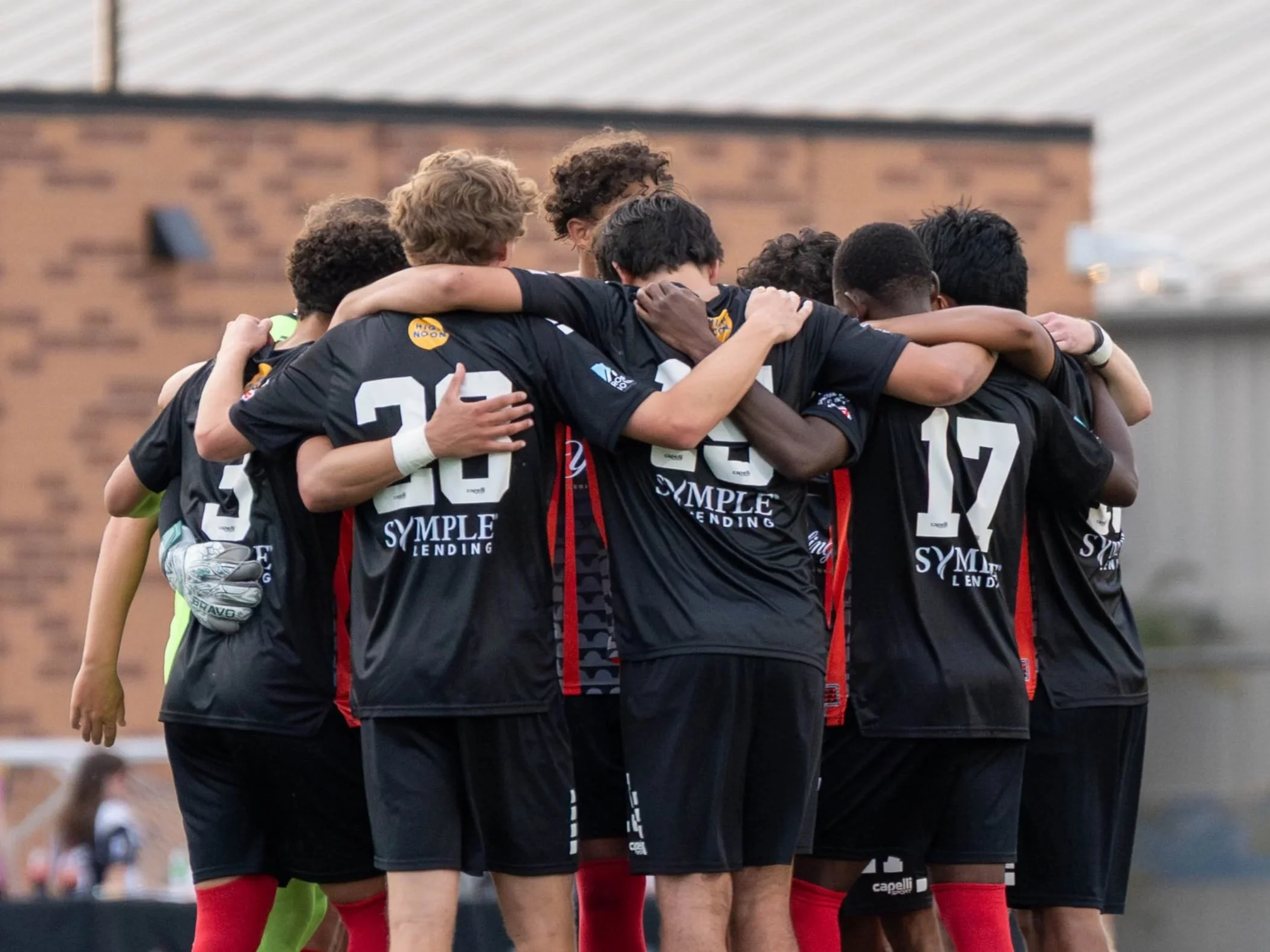
Des Moines Menace in a huddle during a home match agsinst Sunflower State FC at Mediacom Stadium on May 30th. 2026 - Photo by: Austin Farrow
Home venue: Mediacom Stadium
Why to follow: For one of the Midwest’s model lower-league clubs: a Des Moines fixture since 1994 with two national titles, 22 playoff appearances, and a fanbase big enough to help set Iowa soccer attendance records. They’re both a proven winner and a window into Iowa’s soccer future, developing talent while giving the state a true summer soccer identity. Plus Des Moines is determined to become a fully professional team.
Sunflower State FC — Kansas City, Kansas
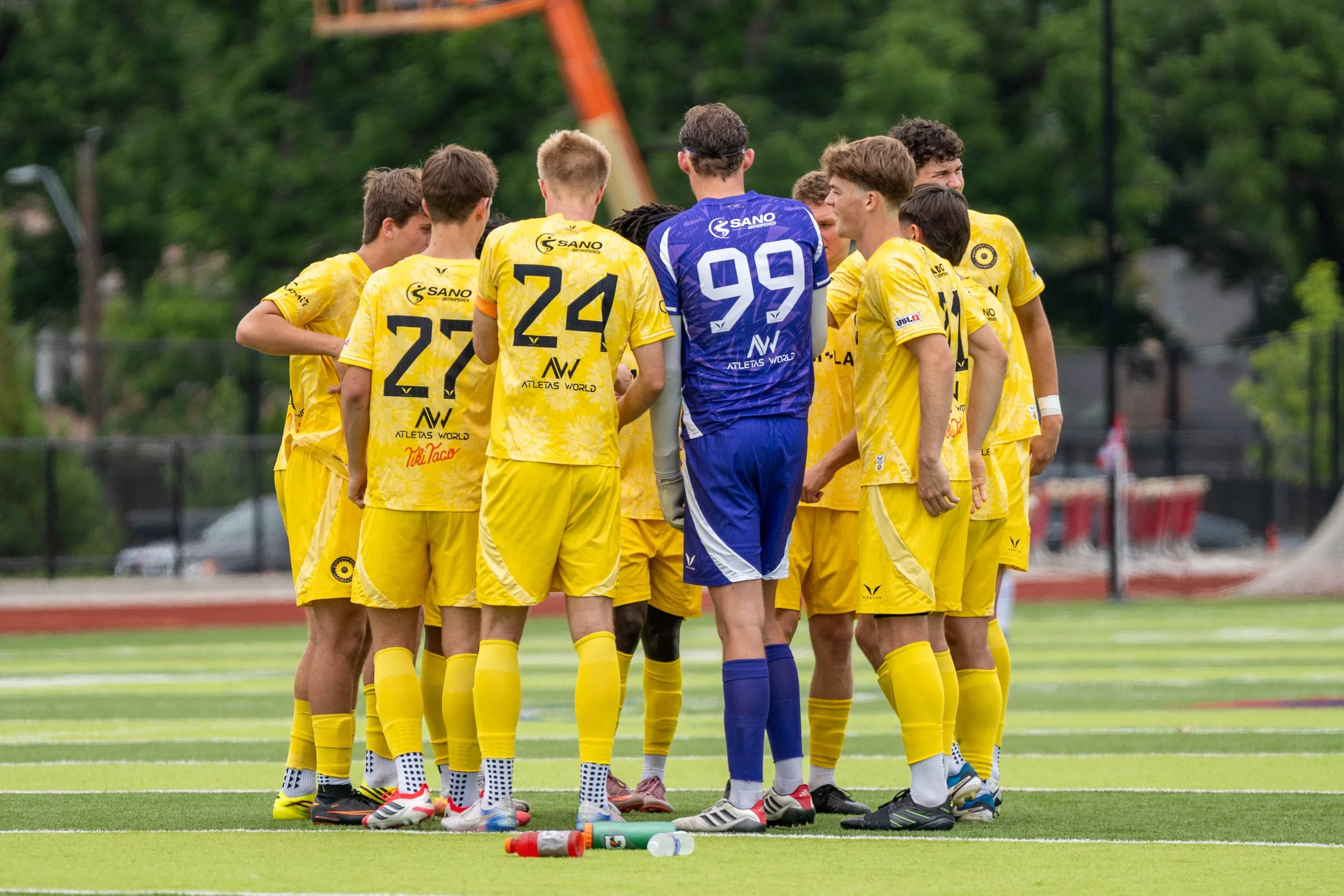
Sunflower State FC in a huddle during a home game against Springfield FC at The Pembroke Hill School on June 6th, 2026 - Photo by: Austin Farrow
Home venue: The Pembroke Hill School
Why to follow: For a still-young Kansas City area club with real grassroots texture: local amateur origins, a 2025 jump to USL League Two, and a mission of creating higher-level opportunities for players in the KC soccer community. Their WPSL team gives the club a broader identity too, making Sunflower feel less like a one-team summer project and more like a growing Kansas City soccer platform. With partnerships across the metro Sunflower is laying the roots for soccer in Kansas City.
Santafé Wanderers — Kansas City, Kansas
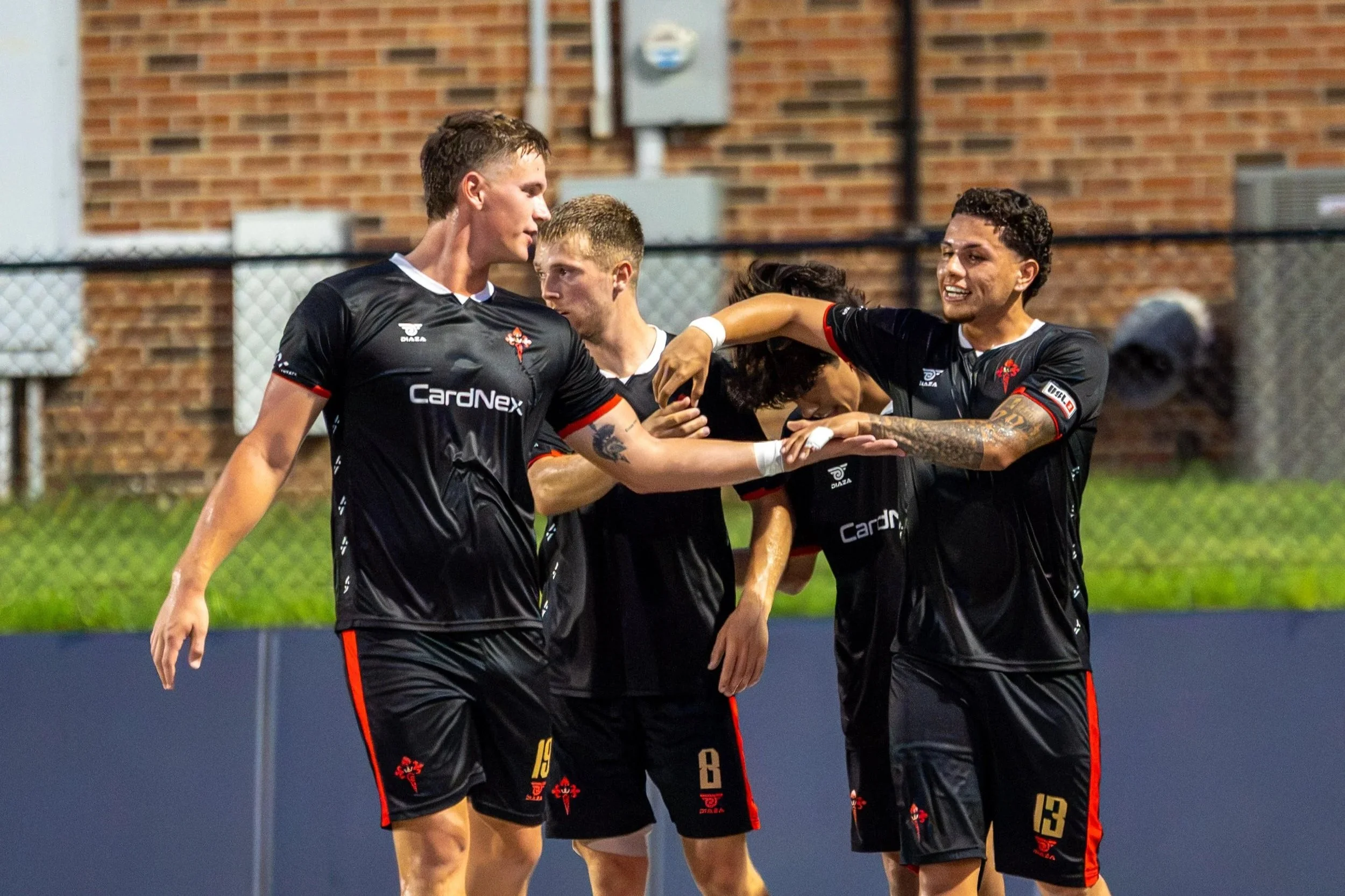
Santafé Wanderers celebrating after scoring a goal versus Sunflower State FC on June 27th, 2026 - Photo by: Austin Farrow
Home venue: Pioneer Stadium
Why to follow: Santafé Wanderers are one of the Kansas City area’s most deeply rooted lower-league clubs. Founded in the 1990s, the club has strong ties to the region’s Hispanic and Mexican communities and takes its name from the Santa Fe Trail. Now finishing up their second USL League Two season, Santafé carries decades of local amateur soccer history onto a broader regional stage. The Wanderers feel less like a newly created expansion brand and more like a longstanding neighborhood institution entering a new chapter.
FC Ambush — St. Louis, Missouri
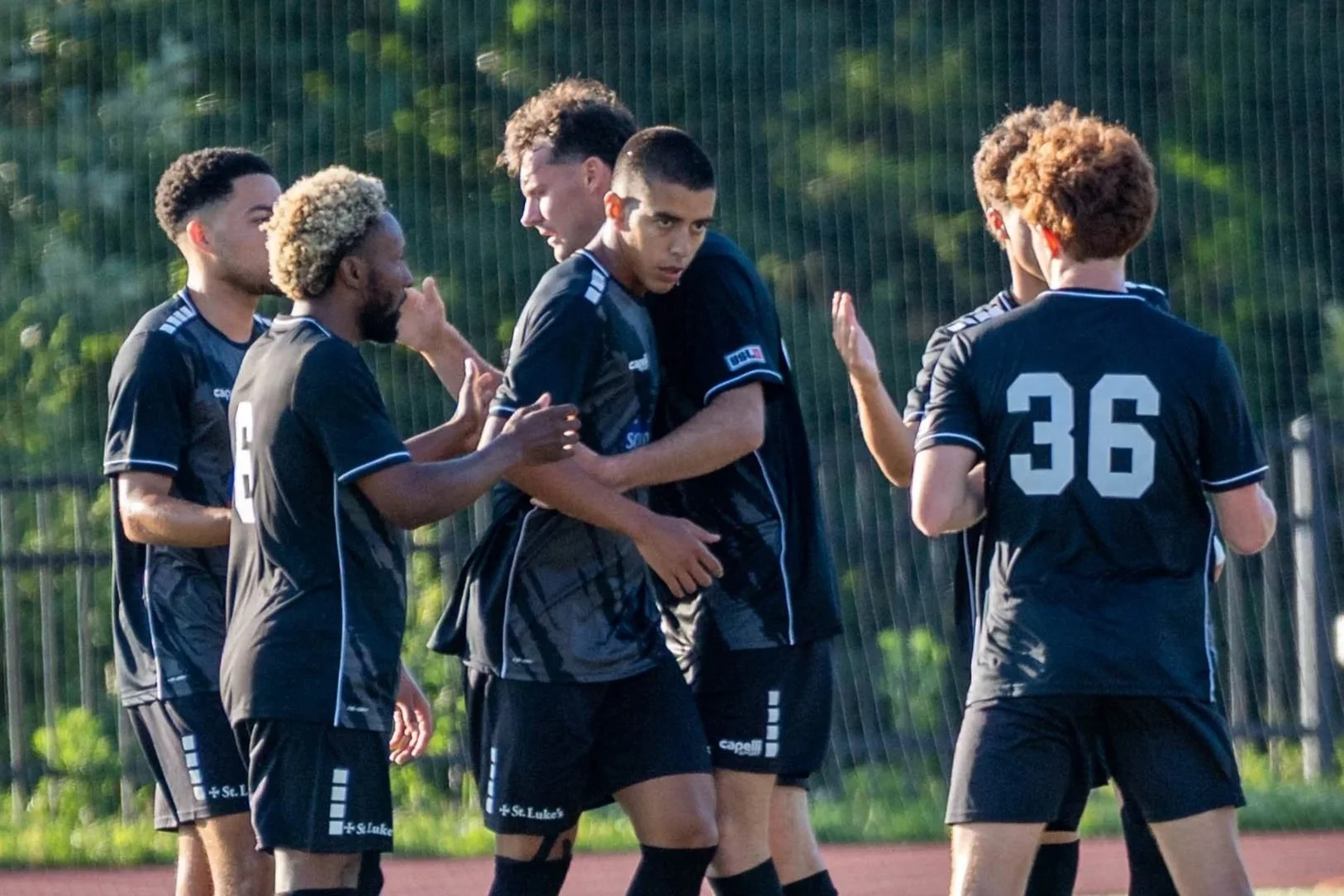
FC Ambush celebrating after scoring a goal against Sunflower State FC at Spartan Field on June 13th, 2026 - Photo by: Austin Farrow
Home venue: Spartan Field
Why to follow: For one of the Midwest’s most unusual soccer crossovers: a USL League Two side spun out of the St. Louis Ambush, the city’s long-running professional indoor club. It gives their summer outdoor games a built-in identity, connecting pre-professional player development with the louder, faster, boards-and-carpet world of MASL arena soccer.
Peoria City — Peoria, Illinois
Home venue: Shea Stadium
Why to follow: For one of USL League Two’s best small-market success stories: the “Flying Carp” have quickly turned Peoria into a real summer soccer stop, pairing strong crowds with three playoff trips and a 2024 run to the national final. There’s already culture, momentum, and a very weird fish nickname to latch onto.
For Lower League Report, USL League Two is one of the clearest examples of why this publication exists. The matches are competitive, the players are ambitious, and the stories often move quickly. A player who is relatively unknown in June can become a name to remember by July.
WPSL
The Women’s Premier Soccer League (WPSL) is one of the most important spaces in the women’s lower-league game. It gives college players, former college players, local standouts, and aspiring professionals a place to compete during the summer.
In the Midwest, WPSL coverage matters because of the local women’s soccer growth, lack of coverage, strong clubs, player pathways, connection to college programs, and so much more. Not to mention, with the U.S. being one of the best women’s soccer countries in the world many of these players may ultimately make the jump overseas to play on bigger, brighter stages around the world.
Clubs to know:
Oklahoma City FC — Oklahoma City, Oklahoma
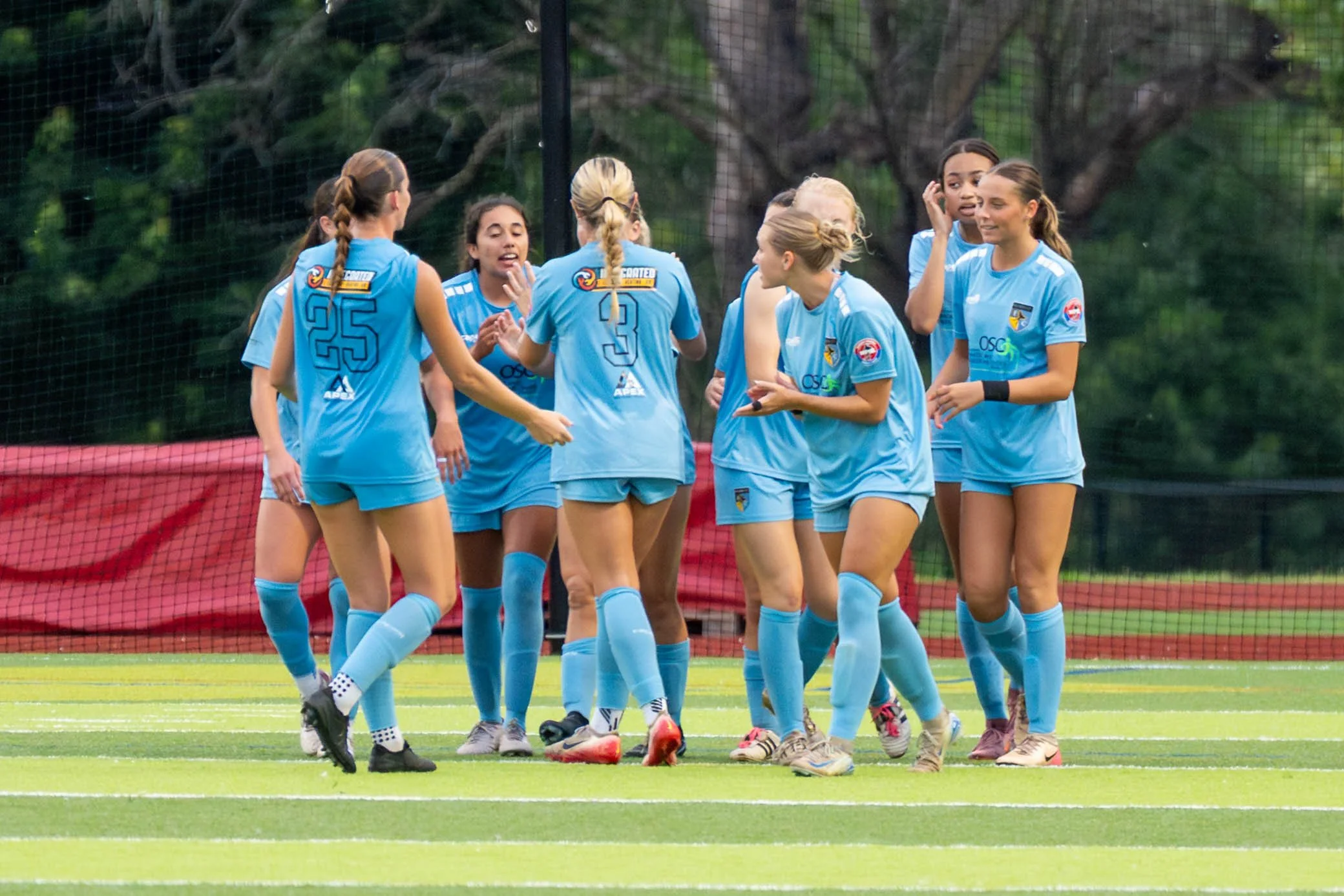
Oklahoma City FC celebrates after scoring a goal on the road against Sunflower State FC on June 6th, 2026 - Photo by: Austin Farrow
Home venue: Mustang High School’s Soccer stadium
Why to follow: For one of the more established and credible WPSL clubs, Oklahoma City FC is currently the fourth-longest-tenured club in the league. Not to mention, their on the field success can’t be understated as they reached the 2025 WPSL Regional Finals
Kansas City Current II — Kansas City, Missouri
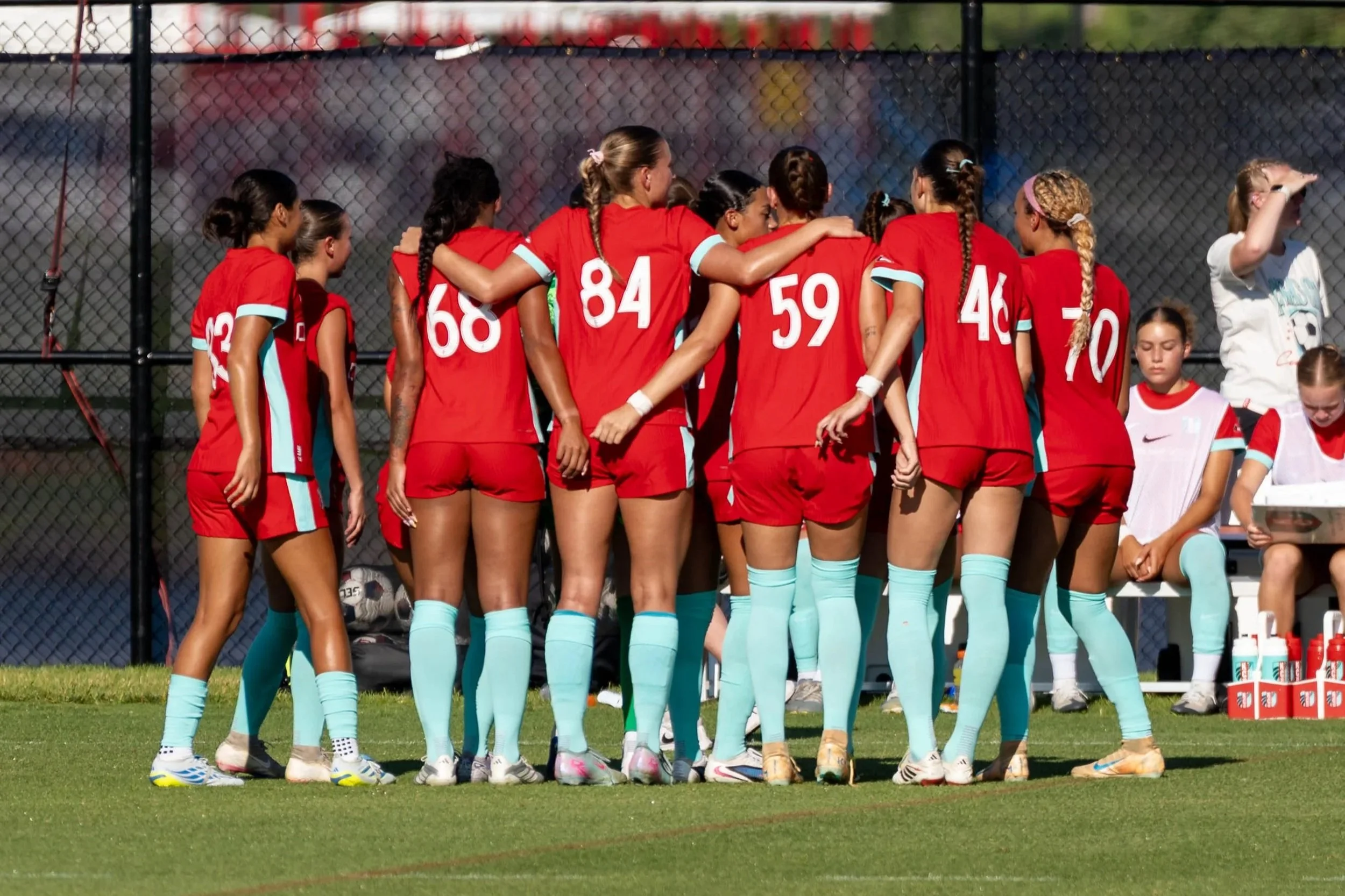
KC Current II in a huddle at Riverside Stadium on June 17th, 2026 - Photo by: Austin Farrow
Home venue: Riverside Stadium
Why to follow: We don’t normally recommend second teams or reserve teams but we feel this one is deserved. For some of the best infrastructure and professional backing from their NWSL first team club, KC Current II is a fun team to watch. Some may say they have too many resources at their disposal, others may claim there’s no such thing. We will leave that up to you to decide. But if you’re open to supporting a reserve side this is a great choice. Plus they play on natural grass so for injuries it has been proven to be much better on women’s bodies in preventing certain injuries.
Sunflower State FC — Kansas City, Kansas
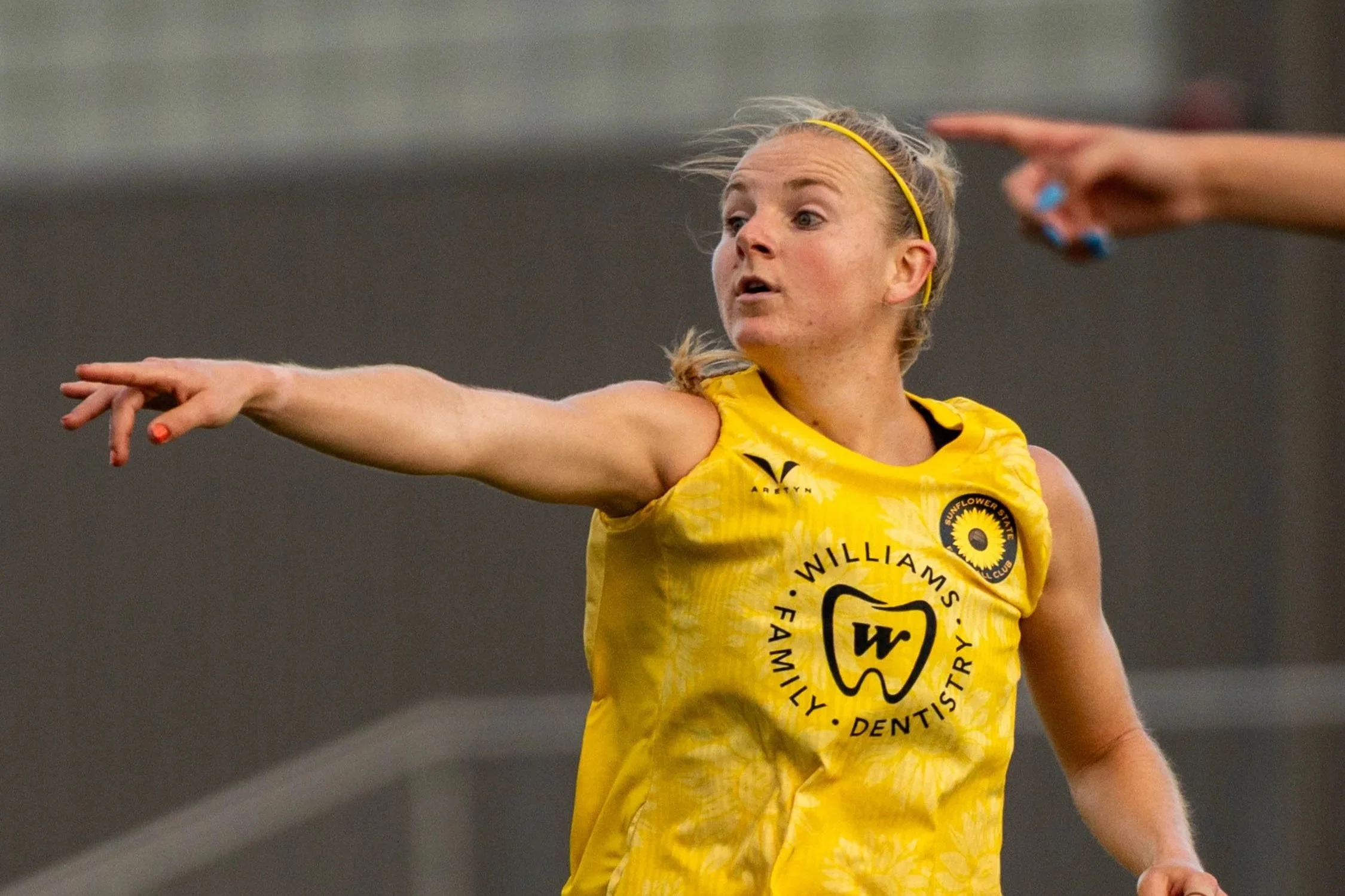
Sunflower State FC’s Alexis Mitchell points instruction to her teamate on the road against FC Wichita on June 10th, 2026 - Photo by: Austin Farrow
Home venue: The Pembroke Hill School
Why to follow: For a club that may not have the resources of KC Current II or a club as established as Oklahoma City FC. Sunflower State still does a lot of things right. They are more of a regional hub for college players having a large portion come from schools around Missouri and Kansas especially MidAmerica Nazarene where the coach already coaches at. While they may not be the best in terms of results or resources they do everything well enough that you can see a club clearly moving in the right direction.
The women’s game beneath the professional spotlight deserves more consistent coverage. These players are not just filling out a summer schedule. They are competing, developing, and representing clubs that are helping grow the game locally.
NPSL
The National Premier Soccer League(NPSL) is another important part of the men’s lower-league soccer landscape. Like USL League Two, it gives amateur and pre-professional clubs a national platform while still leaving room for strong local identities, different club models, and communities trying to build something that lasts.
The season is short, but that urgency is part of what makes it worth following. Clubs do not have much time to settle in. Players are trying to make an impression quickly. Coaches have to build competitive teams in a limited window. For supporters, it can feel like an entire year of momentum gets packed into a few summer months.
In the Midwest, NPSL coverage matters because it sits in that space between local amateur soccer and the bigger national conversation. Some clubs are trying to prove they belong on a larger stage. Others are simply giving their cities a serious summer soccer team to care about.
Clubs to know:
Siouxland United FC - Sioux City, Iowa
Why to follow: From their website: “The vision encompasses not only on-field success but also the holistic development of players as individuals. Siouxland United F.C. aspires to be a force for positive change, instilling core values of teamwork, discipline, and leadership. The club envisions creating a soccer culture that resonates with the Siouxland community, inspiring pride and excitement.”
Lower League Report angle: Light coverage - Siouxland is not a major team we intend to cover but we may still do occasional coverage on them if we are in the area or a prominent story comes up.
UPSL
The United Premier Soccer League (UPSL) now stands as the largest pro-development league in North America. Today the league includes more than 900+ men’s and women’s teams nationwide, and the Premier Division for Spring 2026 has 344 clubs competing for 32 places in the National Playoff Bracket to become National Champion.
In the Midwest, coverage matters because these teams and leagues are truly started from the ground up and have unique stories to tell. Plus, they have both Spring and Fall seasons which separates it from many other pre-professional leagues.
Clubs to know:
Fountain City Athletic — Kansas City, Missouri
Kansas City Legends — Kansas City, MO/KS
Club Atlético Omaha — Omaha, Nebraska
Dodge City Toros FC — Dodge City, Kansas
MANY MORE NOT LISTED
These teams are all over the region and country!
THE league for clubs
The League for Clubs, or TLFC, is one of the newer pieces of the American lower-league soccer map. It is a national men’s amateur league built around the idea that clubs should not just be teams inside a league, but stakeholders helping shape what the league becomes.
In the Midwest, TLFC matters because of its partnership with our next league the Midwest Premier League (MWPL). Beginning in 2026, new TLFC conferences are supposed to sit above the existing MWPL structure, giving ambitious clubs a possible next step beyond regional competition. Starting as early as 2027, the two leagues plan to develop a merit-based promotion and relegation system between MWPL and TLFC.
That makes TLFC one of the more interesting storylines to watch in the region. For years, lower-league soccer in the United States has been full of clubs trying to figure out what comes next. Some teams outgrow local or regional competition, but the next step is not always clear. TLFC is trying to create one possible answer.
Clubs to know:
Tulsa Athletic - Tulsa, Oklahoma
Why to follow: They were created as a mechanism to enhance and bring the community together through the sport of soccer. They wish to create healthy pathways for our younger players to develop as athletes and people. Their goals are to continually strive to bring people together for both on field and off field victories. Their club motto on the field is “Respect all, fear none” and the motto off of the field “Respect all people, fear no challenge”.
Emporia FC - Emporia, Kansas
Why to follow: From their website: Emporia FC was founded to create meaningful opportunities for players in Emporia and Southeast Kansas. We believe futbol development starts with strong fundamentals, clear pathways, and a supportive environment that values discipline, teamwork, and personal growth.
Evolution SC U23 - Omaha, nebraska
Why to follow: They have a commitment to U23 players only so you’re sure to see young players. Shows they value player development over almost all else.
MWPL
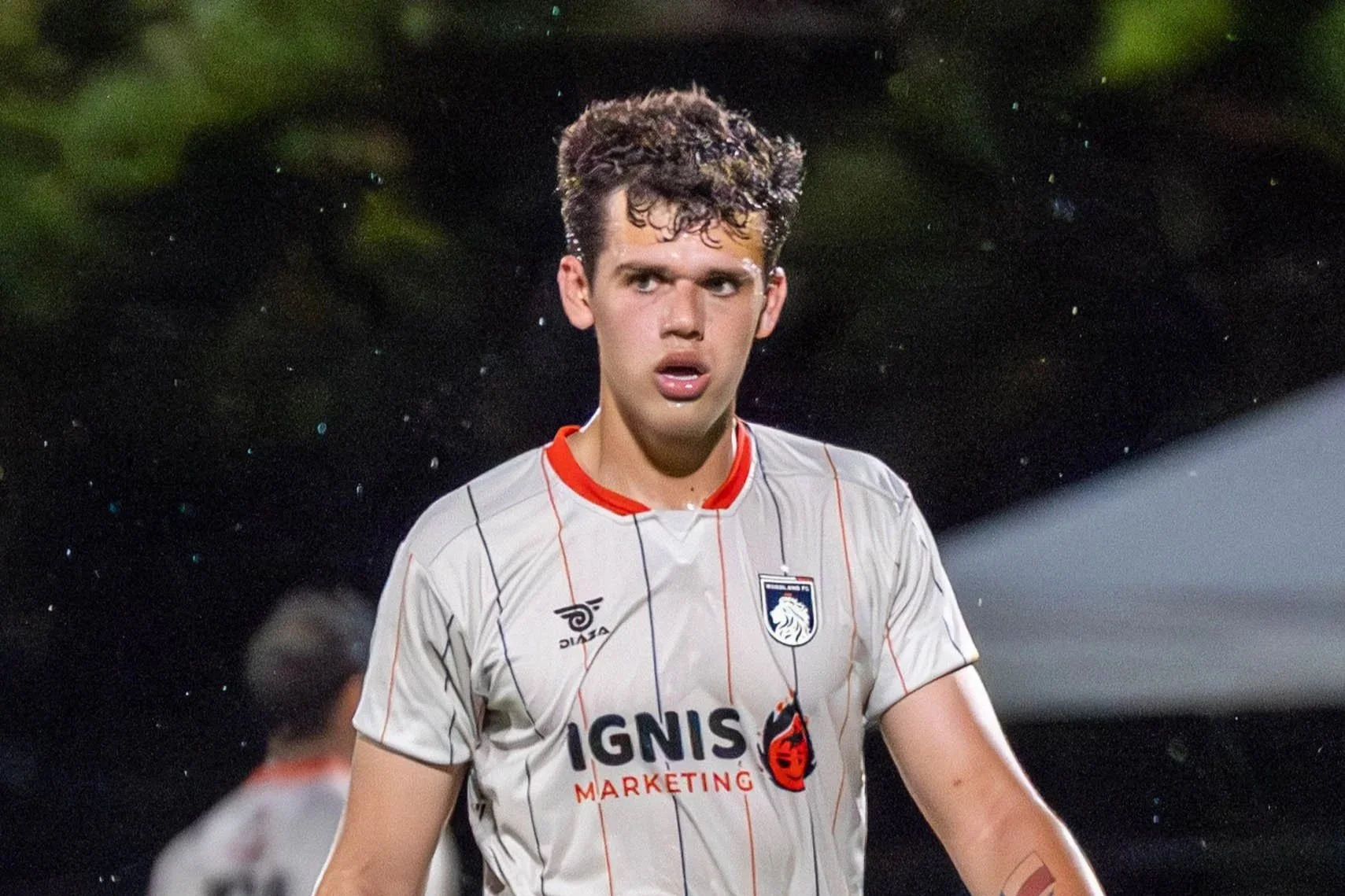
Woodland FC’s Nico Bair looks off towards the ball during a wet home match against Southside FC on June 6th, 2026 - Photo by: Austin Farrow
From their website: The Midwest Premier League (MWPL) is an American regional soccer league that is run by its member clubs. The goals of the league are to focus on sustainability, promote high-level competition among clubs, encourage participation in regional and national cup competitions, and support all of its member clubs through the sharing of ideas and best practices. After record expansion years, the 2026 Midwest Premier League season features 53 member clubs distributed among 7 divisions.
Clubs to know:
Woodland FC — Overland Park, Kansas
Great Plains FC — Shawnee, Kansas
Southside FC — Grandview, Missouri
AFC Columbia — Columbia, Missouri
MANY MORE NOT LISTED
These teams are all over the region!
What Makes This Scene Worth Following?
Lower-league soccer is different because the distance between the field and the community is smaller.
You can hear the benches. You can see the emotion after a missed chance. You can recognize the volunteers, families, supporters, and local players who give the match its shape. The game does not feel packaged from far away. It feels immediate.
That closeness creates stories that are easy to overlook but worth documenting.
There are players trying to extend their careers. College athletes trying to earn minutes. Coaches building teams with limited time. Clubs trying to earn trust in their cities. Supporters creating traditions from scratch. Local venues becoming matchday homes for a few important nights each summer.
These stories may not always come with national attention, but they matter to the people living them.
Storylines to Watch in 2026
As Lower League Report begins covering the scene, these are some of the storylines worth watching.
1. WHO COULD HANDLE THE JUMP UP
With multiple new clubs entering the MWPL for 2026 who made the jump up look easy and who struggled?
2. IS PRO/REL COMING TO WPSL?
With so many teams and more soon to come is pro/rel coming to WPSL?
3. PLAYER FEATURES
Inside certain players on and off the field.
4. WPSL PLAYOFFS
Who will be victorious on the national WPSL stage?
5. CAN PEORIA CITY HANG ON FOR THE DIVISION CROWN?
Will Peoria stay in the top spot or will another division rival dethrone them in the final matches of the regular season?
These are the kinds of stories Lower League Report aims to follow throughout the season, not only through final scores, but through photos, features, match galleries, and the moments around the game.
How Lower League Report Will Cover It
This guide is only the starting point.
Lower League Report will cover lower-league soccer in the Midwest through written features, match galleries, player and club stories, photo essays, supporter culture pieces, and a monthly photo magazine.
The goal is not to make every match look bigger than it is. The goal is to show why it matters to the people who are there.
Some nights, that story will be a late winner. Other nights, it will be a player chasing one more opportunity, a club building its identity, or a supporter group trying to create something that lasts.
Lower-league soccer is not always easy to follow from the outside. But once you know where to look, there is more happening than most people realize.
This guide is the first step.
The coverage continues from here.
Lower League Report is independent and free to read. If you'd like to support our coverage, you can buy us a coffee.
